How to Find an Arduino Instructor Near You: The Complete Guide
Learning Arduino from tutorials and YouTube videos will only take you so far. At some point — whether you are stuck on a specific project, trying to move past beginner level, or just learning faster with a real teacher — working with an instructor is the most efficient path forward. This guide explains exactly how to find a qualified Arduino instructor near you in 2026, what to look for, what to expect, and what to pay.
Why Work With an Arduino Instructor?
Self-directed learning works well for some people and poorly for others. The advantages of working with an instructor are concrete: you get immediate answers when you are stuck, you get feedback on your specific project rather than generic advice, you avoid the hours of frustration that come from debugging alone, and you learn faster because the instruction is adapted to your pace and goals.
For beginners, the single biggest barrier to progress is not lack of content — there is more free Arduino content online than anyone could consume in a lifetime. The barrier is getting unstuck when something does not work. An instructor solves that problem directly.
Types of Arduino Instructors
Independent Private Instructors
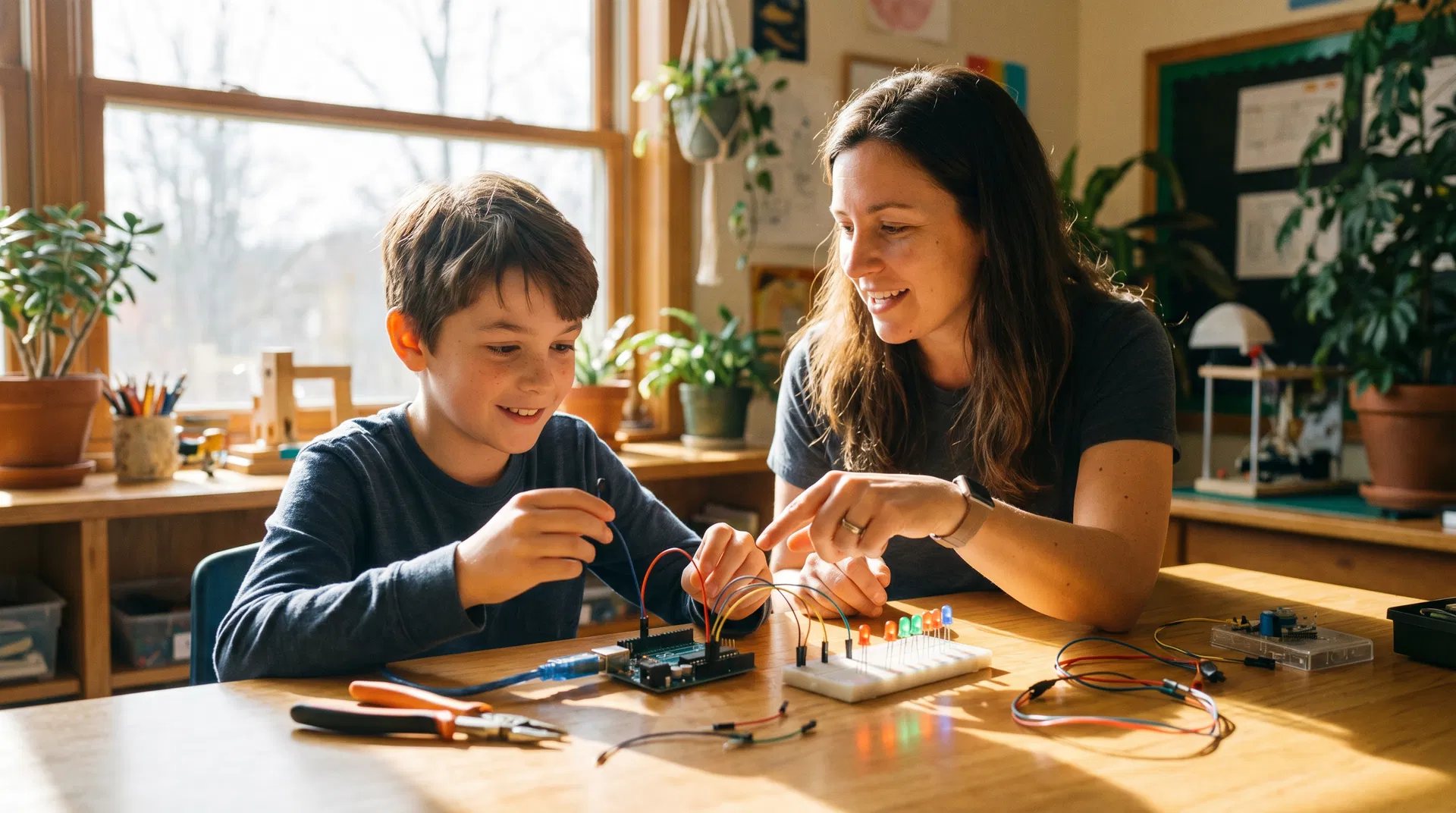
Independent instructors offer one-on-one or small-group lessons, either in person or via video call. This is the most flexible and personalized format — the instructor adapts entirely to your goals, your pace, and the specific projects you want to build. Private instruction is the fastest learning format for most people but also the most expensive per hour.
Makerspace and Workshop Instructors
Most makerspaces employ or contract instructors who run regular Arduino classes — typically single-session introductions or multi-week beginner courses. The group format means less individual attention than private instruction, but the hands-on environment, access to shared tools, and community of fellow learners compensate for that. Makerspace classes are usually the most affordable instructor-led option.
Community College and Continuing Education Instructors
Community colleges and continuing education programs increasingly offer electronics courses that cover Arduino as part of a broader curriculum. These instructors bring academic credentials and a structured curriculum, but the semester schedule and group size mean less flexibility than private or makerspace instruction.
Online Instructors
A growing number of Arduino instructors offer lessons entirely online via video call platforms. This format removes geographic limitations — you can work with the best instructor for your specific goals regardless of where either of you is located. Online instruction is particularly valuable for learners in areas with limited local options.
What to Look for in an Arduino Instructor
Relevant experience
Look for instructors who have built real projects with Arduino, not just people who have completed courses. Ask what they have built. The best instructors are active makers who teach because they love the subject.
Teaching experience
Technical expertise and teaching ability are not the same thing. Look for instructors with experience teaching beginners specifically — someone who has helped non-technical people learn electronics understands the common stumbling blocks in a way that a purely technical expert might not.
Clear communication
Before committing to lessons, have a brief conversation with the instructor. Do they explain things clearly? Do they adapt their language to your level? Do they listen to what you want to build and tailor their approach accordingly?
References or reviews
Ask for references from previous students or look for reviews if the instructor is listed on a directory. Past student experiences are the most reliable indicator of whether an instructor is worth working with.
What to Expect From Arduino Lessons
A typical first lesson with a private Arduino instructor covers: an overview of the board and its components, your first simple project (usually an LED circuit), an introduction to the Arduino IDE and how to upload code, and a discussion of what you want to build and how the lessons will be structured going forward.
Progress from there depends entirely on your goals. Some students want to build one specific project — a home automation system, a custom controller, a sensor-based gadget — and work with an instructor until that project is complete. Others want a broad foundation and work through a structured curriculum over several weeks or months.
What Does Arduino Instruction Cost?
Private one-on-one instruction typically runs $40–$120 per hour depending on the instructor's experience, location, and whether sessions are in person or online. Makerspace classes typically run $20–$80 per session. Community college courses run at standard continuing education tuition rates, usually $100–$400 for a multi-week course.
Many instructors offer a free or discounted introductory session so you can assess whether the fit is right before committing to ongoing lessons.
How to Find an Arduino Instructor Near You
The ArduinoClasses directory is the most comprehensive resource for finding Arduino instructors in the United States. Search by location to find instructors near you, filter by format (in-person or online), and browse instructor profiles to find someone whose experience and approach match your goals.
If you are in an area with limited local options, remember that online instruction removes the geographic barrier entirely. Many of the best Arduino instructors teach students nationwide via video call.
Ready to Start Learning Arduino?
Browse our directory of 244+ Arduino classes across the United States — from free community workshops to professional certifications.
Explore Classes →